The VAT Line You Leave Blank: Domestic Reverse Charge for Smaller UK Trade Firms
Most trade firms can spot a VAT problem when it arrives as a letter from HMRC. The domestic reverse charge is quieter than that. It changes the invoice, the cash and the conversation with the client, and it does so before anyone has complained. For smaller UK construction firms, the rule is now part of normal trading. Since 1 March 2021, specified construction services supplied between VAT-registered businesses have generally been subject to the domestic reverse charge. In 2026 it is not a novelty; it is a discipline.
What the reverse charge actually does
Normally, a subcontractor invoices the main contractor for work plus VAT. The main contractor pays the VAT to the subcontractor, and the subcontractor pays it to HMRC. Under the domestic reverse charge, the subcontractor does not charge VAT. The invoice shows the net amount and a clear statement that the reverse charge applies. The customer accounts for the VAT on its own return, usually as both output tax and input tax, subject to the usual recovery rules.
The practical effect is simple: the VAT never passes through the subcontractor's bank account. That can be a relief. It can also be a trap if the firm has been using VAT receipts as short-term working capital.
When it applies — and when it does not
The reverse charge generally applies to construction services within the scope of the Construction Industry Scheme, supplied business-to-business, where the customer is VAT-registered and is not an end user or intermediary. It covers standard-rated and reduced-rated work. It does not apply to zero-rated work, and it does not apply when the customer is a domestic end user or a business that is not VAT-registered.
Two exceptions matter in practice. An end user is a customer who is not intending to make an onward supply of the construction services — for example, a property owner occupying or letting the building. An intermediary is a business that arranges for construction services to be supplied but does not receive them as the main contractor. If the customer is an end user or an intermediary, normal VAT rules apply and the supplier charges VAT.
Invoicing without guesswork
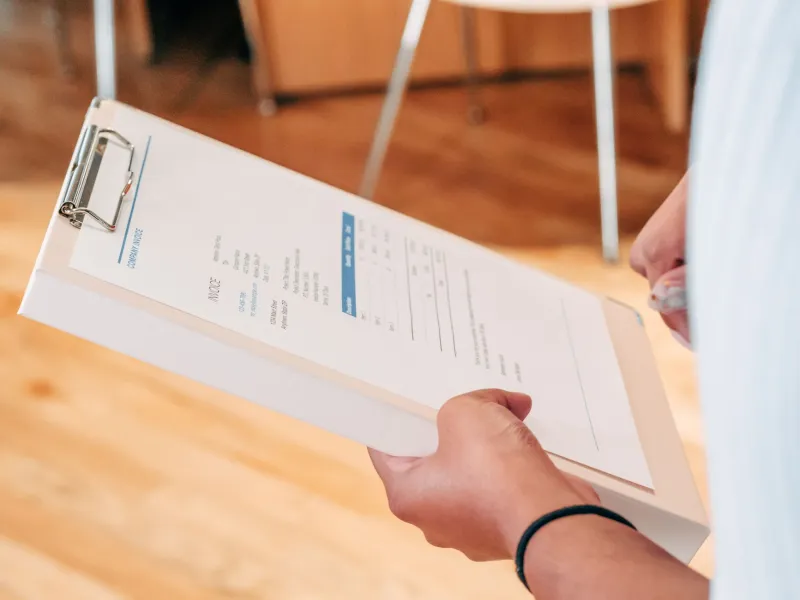
A reverse charge invoice should not show a VAT amount. It should show the net charge, a description of the work, the supplier's VAT number and the customer's VAT registration number where required, and wording such as 'Reverse charge: VAT Act 1994 Section 55A applies.' It should not be labelled zero-rated. That is a different treatment and it will confuse the record.
Before quoting, confirm the customer's status. Ask for the VAT number, ask whether the work is for their own use or for onward supply, and record the answer. If the customer is a main contractor, the answer is usually straightforward. If the customer is a developer, landlord or property owner, do not assume. A short email before the quote is cheaper than a correction after the invoice.
Cash flow: the quiet part
The cash-flow point is not that the firm loses money. It is that the firm never holds the VAT in the first place. A firm that has been used to receiving gross payments may find that its bank balance looks thinner even though its net position is similar. The danger is spending the VAT element on wages, materials or van repairs and then discovering that there is no VAT to pay over — because there never was.
Forecast on net receipts. Update the accounting software so that it treats reverse charge sales correctly. Keep the VAT return treatment consistent. If the firm uses the flat rate scheme or cash accounting, check the interaction with the accountant; the reverse charge has its own record-keeping consequences.
Mistakes that turn into disputes
The most common mistake is charging VAT when the reverse charge applies. The customer may pay it, then ask for a credit note, and the firm is left correcting a VAT return. The opposite mistake is not charging VAT when the customer is an end user. That can leave the firm out of pocket and the customer with an unexpected VAT liability.
A third mistake is using an old invoice template. It is easy to leave a VAT line in place and let the software calculate tax that should not be there. A fourth is failing to keep evidence of the customer's status. If HMRC asks why a supply was treated as reverse charge, a note of the customer's VAT number and the nature of the supply is worth more than a verbal recollection.
When a dispute arises, deal with it in writing. State the treatment, attach the evidence and correct the invoice promptly. Do not simply issue a credit note and hope the point disappears; the VAT record needs to be right.
A short checklist
- Confirm the customer's VAT registration and whether they are an end user or intermediary.
- Quote net, and state the VAT treatment you expect to apply.
- Remove VAT from the invoice, use clear reverse charge wording, and include the required VAT numbers.
- Keep the customer's confirmation and the invoice copy with the job file.
- Forecast cash on net receipts, not on VAT you will never receive.
- Review the VAT return entry with the accountant if the job is unusual.
- Resolve invoice queries in writing before the payment date.
The reverse charge is not a penalty. It is a change of route. Firms that treat it as part of the quoting and invoicing routine tend to find that it causes less trouble than the old gross invoice did. The ones that get caught are usually the ones that assumed the old template still worked.
This note is general guidance for UK trade firms, not tax advice. Check the specific treatment with your accountant or HMRC before changing your invoicing.