The Handover Gap: Completing a Part-Built Job Without Absorbing Its Defects
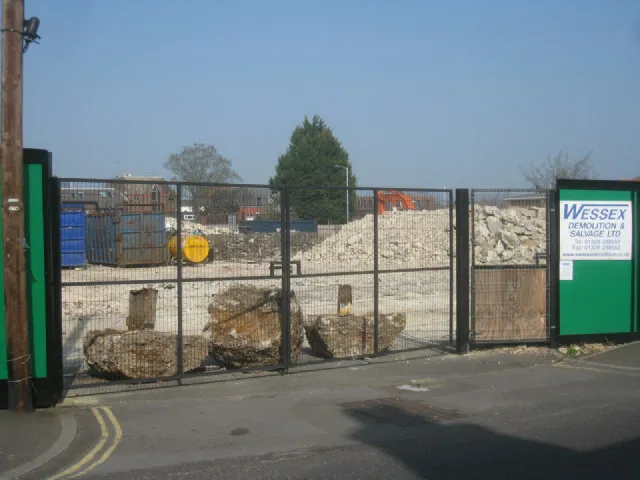
Photo: Sandy B , CC BY-SA 2.0, via Wikimedia Commons
A half-finished job can look like easy turnover. The client is anxious, the programme has slipped, and another firm has already walked away. For a smaller UK trade business, however, the commercial danger is rarely the work that remains. It is the work that has already been done badly, covered up, or left in a condition that nobody has properly recorded.
The firm that steps in is not automatically responsible for the failures of the firm that left. But that protection does not arise by instinct or good intentions. It arises from a clear survey, a written defect schedule, a quotation that says exactly what is and is not included, and a price that reflects the added risk. The aim is straightforward: take on the completion work without adopting the previous contractor's liabilities.
Survey Before Pricing
No price should be offered from a site walkover and a verbal description. The first visit should be treated as a survey, not a sales opportunity. Record what exists, what is missing, and what cannot be seen. Photograph each affected area with a date stamp, note locations against room names or grid lines, and mark up drawings where available.
Where possible, obtain the previous contractor's scope, drawings, specifications and any inspection records. These documents may be incomplete, but they help establish what was intended. Ask the client whether building control, a warranty provider, an insurer or a principal designer has already raised concerns. If specialist testing is needed, such as electrical certification, drainage CCTV, moisture readings or structural inspection, say so before quoting. A modest testing cost is easier to explain than a later argument about inherited defects.
A Defect Schedule That Stands Up
A useful defect schedule is not a general list of complaints. It should identify each item, its location, the evidence available and the action proposed. For example: 'First-floor bathroom, poor fall to shower waste, ponding observed, propose partial removal and re-lay.' Each line should be capable of being priced, accepted or excluded.
The schedule should distinguish between three categories. First, defects that must be remedied before completion can proceed. Second, items that are cosmetic or outside the new scope. Third, latent risks that cannot be confirmed without opening up. The client should sign or acknowledge the schedule before the quotation is issued. This does not turn a trade firm into a building surveyor, but it does create a common record of the condition of the site at handover.
Quotation Caveats and Exclusions
The quotation should avoid vague phrases such as 'finish off' or 'make good as necessary'. Define the completion scope by reference to drawings, specifications and the defect schedule. State clearly that the firm is not responsible for the design, workmanship or compliance of work carried out by others, except where the firm has expressly agreed in writing to remedy a specific item.
Useful exclusions include: latent defects discovered after opening up; failure of existing services or structures; rectification of work not listed in the schedule; and any warranty or guarantee for the previous contractor's work. If the client requires a warranty for the whole project, that is a different commercial arrangement and should be priced and reviewed separately. Where a contract such as JCT Minor Works is proposed, check how the completion date, defects liability and indemnity clauses interact with the inherited work. If the firm is asked to accept principal contractor duties or design responsibility, obtain advice before signing.
Pricing the Added Risk
Inherited work carries three costs: the visible remedial work, the time lost in surveying and coordination, and the risk of discovering further defects. Price each openly. A separate survey and reporting line is often accepted more readily than a single inflated completion figure. Remedial work can be priced as measured work or as a provisional sum where the extent is uncertain.
For unknown conditions, a defined risk allowance is better than a hidden contingency. State what the allowance covers and how it will be used. If additional defects are found, work should stop in that area until a written instruction and price are agreed. This discipline protects both sides. It also prevents the common problem where a firm absorbs extra work simply because it is already on site and wants to be helpful.
Keep the Client Informed
The client should understand the boundary in plain terms. Explain that the firm will complete the scope described, remedy the scheduled defects and report anything else found. Explain that previously completed work remains the responsibility of the original contractor unless expressly adopted. Put this in the quotation, not only in conversation. A short covering letter with the defect schedule and quotation is usually enough.
When work begins, keep the same discipline. Record progress, variations and any newly discovered defects. If the client asks the firm to 'just sort out' an item outside the schedule, treat it as an instruction and price it accordingly. The handover gap is closed by paperwork and clear scope, not by optimism.
Taking over half-finished work can be a sound job for a well-run trade firm. The key is to enter it with eyes open. Survey properly, record what is there, exclude what is not yours and price the risk you are accepting. Done that way, the firm can finish the job without inheriting blame for work it did not carry out.